
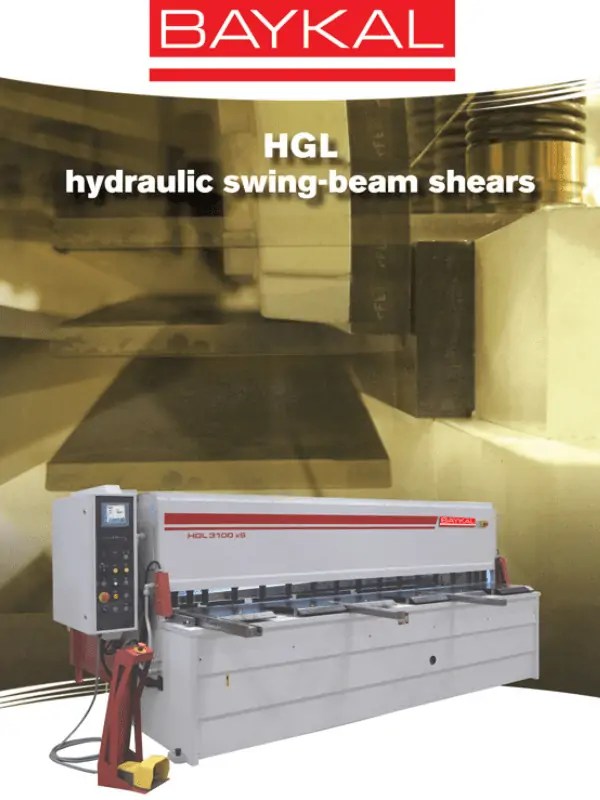
Hydraulic shear tonnage is sized to the thickest, highest-strength material the shear will cut on a routine basis, using the shearing force formula (thickness times length times shear strength of the material), not the thinnest or most common job. Undersizing tonnage causes premature blade wear, poor cut edges, and stalled cuts; oversizing wastes capital and floor space without adding capability the shop uses.
The Shearing Force Formula
Required shearing force is calculated as: material thickness multiplied by the length of cut multiplied by the material’s shear strength. Mild steel has a shear strength around 50,000 PSI, while stainless steel runs closer to 80,000 PSI, which means a shear correctly sized for mild steel can be significantly undersized the moment stainless enters the material mix. Always size to the highest shear strength material the shop actually runs, not just the most common one.
Tonnage Sizing Chart by Material and Thickness
| Material | Thickness | Approx. Tonnage Needed (per foot of cut) |
|---|---|---|
| Mild steel | 1/4 inch | 25 to 30 tons per foot |
| Mild steel | 1/2 inch | 50 to 60 tons per foot |
| Mild steel | 3/4 inch | 75 to 90 tons per foot |
| Stainless steel | 1/4 inch | 40 to 48 tons per foot |
| Stainless steel | 1/2 inch | 80 to 96 tons per foot |
| Aluminum | 1/2 inch | 20 to 25 tons per foot |
These figures assume a standard shear blade rake angle and a reasonably sharp blade. A dull blade can increase required force by 20 percent or more, which is one of the most common reasons a correctly specified shear appears underpowered after a year of heavy use.
Blade Gap Matters as Much as Tonnage
Blade gap, the clearance between the upper and lower blades, has to scale with material thickness: too tight a gap on thick plate causes double shearing and a rough edge, too loose a gap on thin sheet causes deformation and burring. A shear with an adjustable, CNC-controlled blade gap such as Fab-Line’s HGL and HNC hydraulic shear lines lets one machine hold clean edges across a wider thickness range than a fixed-gap shear.
Swing Beam vs. Guillotine: Does It Change Tonnage Needs
Swing beam shears generally require somewhat less tonnage than guillotine shears for the same thickness because the angled cutting action reduces the instantaneous force needed, while guillotine shears cut the full length simultaneously and demand more tonnage but produce a straighter edge on precision work. Factor cutting style into the tonnage conversation, not just thickness and grade.
Common Sizing Mistakes
- Sizing to average job thickness instead of the thickest and highest-strength material actually run.
- Ignoring stainless or high-strength alloy jobs when they are a small but real percentage of volume.
- Skipping blade gap adjustability, which forces compromises across a mixed thickness range.
- Not accounting for blade wear over time when tonnage is specified at the minimum edge of the calculated range.
According to Fab-Line’s applications engineers, who have specified hydraulic shears for fabrication shops nationwide for over 20 years, the sizing mistake that causes the most warranty calls is buying tonnage for the material a shop cuts most often rather than the material that is hardest to cut, even when that harder material is only a small share of total volume. A shear that stalls or strains on its toughest routine job wears out its hydraulic seals and blade guides far faster than one sized with headroom for that job from day one.
Rake Angle and Cutting Force
Blade rake angle, the slight incline of the upper blade relative to the lower one, reduces the instantaneous force needed to complete a cut by shearing progressively along the length rather than all at once. A steeper rake angle lowers peak tonnage demand but increases part distortion near the cut edge, so shops running tight tolerance parts typically run a shallower rake and accept the higher tonnage requirement that comes with it. This tradeoff should be discussed at the sizing stage alongside tonnage and blade gap, not treated as a fixed factory default.
Matching the Shear to the Rest of the Line
A shear sized correctly on its own can still bottleneck a line if it is paired with a press brake that outproduces it, or undersized relative to the plate widths a shop’s plasma or laser cutting equipment is already feeding it. Size shear capacity against the full production flow, not the shear in isolation, and confirm blade length covers the widest plate the rest of the shop’s equipment will hand off to it. Fab-Line’s technical support team reviews full line configurations, not just individual machine specs, when quoting a shear purchase.
Frequently Asked Questions
How do I calculate the tonnage I need for a hydraulic shear?
Multiply material thickness by the length of cut by the material’s shear strength, then convert to tons. For quick sizing, use a published tonnage-per-foot chart for the specific material and thickness, and always size to your highest-strength routine material.
What happens if a hydraulic shear is undersized for the material?
An undersized shear struggles to complete the cut cleanly, causing rough or torn edges, excessive blade wear, and in some cases stalling mid-cut, which can damage the hydraulic system over repeated overload cycles.
Does blade gap need to change with material thickness?
Yes. Blade gap should typically run about 5 to 8 percent of material thickness; running the same gap across a 1/4 inch and a 3/4 inch job produces a poor edge on one or the other unless the shear has adjustable gap control.
Is a swing beam or guillotine shear better for a mixed-thickness job shop?
A swing beam shear generally handles a wider thickness range with less tonnage demand, making it the more flexible choice for job shops with varied work, while a guillotine shear suits shops prioritizing a straighter edge on consistent, precision cuts.
Fab-Line’s technical team will size shear tonnage and blade gap to your actual material mix before you buy, not after. Request a sizing consultation or call (888) 317-3615.