

Sheet metal springback is the reason a part measures 92 degrees after you bent it to 90. The metal has an elastic component built into every bend, and it relaxes back toward its original shape the moment the tooling releases pressure. Ignore it and every part in the run drifts off print. Compensate for it correctly and you hit tolerance on the first hit, not the third.
This guide covers what causes springback, how much to expect by material and thickness, and the three practical ways a shop actually corrects for it on a press brake: overbending, bottom bending, and CNC angle compensation.
What Causes Springback in Sheet Metal Bending
Every bend combines two kinds of deformation: plastic (permanent) and elastic (recoverable). The outer surface of the bend stretches, the inner surface compresses, and a neutral axis in between stays roughly the same length. Once the press brake ram retracts, the elastic portion of that strain releases, and the bend angle opens up slightly from where the tooling left it.
The amount of springback depends on four things the operator controls or at least knows going in: material type and tensile strength, material thickness, bend radius relative to thickness, and bending method (air bending springs back more than bottom bending or coining). A mild steel part might spring back 1 to 3 degrees. The same geometry in stainless steel or spring-tempered aluminum can spring back 5 to 10 degrees or more, because higher-strength materials carry more elastic recovery for the same plastic deformation. SSAB’s own press brake setup guide covers the same mechanics in more depth for anyone sourcing material specs directly: SSAB on springback.
How Much Springback Should You Expect by Material
These are shop-floor ranges for air bending at a standard 8:1 die opening, not lab constants. Always confirm on a test piece before running production.
| Material | Typical Springback (Air Bending) | Notes |
|---|---|---|
| Mild steel (A36, CRS) | 1 to 3 degrees | Most predictable, lowest correction needed |
| Hot rolled pickled and oiled (HRPO) | 2 to 4 degrees | Slightly more variable than CRS by coil |
| 304/316 stainless steel | 4 to 8 degrees | Higher yield strength drives more elastic recovery |
| 5052-H32 aluminum | 3 to 6 degrees | Grain direction matters more than in steel |
| 6061-T6 aluminum | 6 to 10 degrees | Heat treated temper springs back the most of common shop materials |
Thickness matters inside each material too. A thinner gauge of the same alloy generally springs back slightly more per degree of bend than a heavier gauge bent with proportionally sized tooling, because the die opening to thickness ratio changes the strain distribution through the bend. Minimum bend radius and springback compensation have to be worked out together; see our press brake minimum bend radius guide for how radius selection by material and thickness factors in.
Overbending: The Fastest Correction on the Shop Floor
Overbending is the simplest fix and the one most shops reach for first. You bend past the target angle by whatever the material springs back, so the part relaxes into the correct angle once the ram releases. If a part needs to land at 90 degrees and the material springs back 4 degrees, you program the brake to bend to 86 degrees.
The limitation is that overbending has to be dialed in per material, thickness, and even per coil lot, since mill-to-mill variation in yield strength changes the springback amount. A shop running mixed materials through one brake needs a documented offset for each combination, not a single rule of thumb applied everywhere. This is also where tooling choice matters: see our American vs European press brake tooling comparison for how clamping systems affect repeatability on mixed-material runs.
Bottom Bending and Coining: Trading Tonnage for Predictability
Bottom bending (bottoming) forces the material fully into the die at the bottom of the stroke rather than just touching it, which reduces springback compared to air bending because more of the bend is driven into plastic deformation. Coining goes further, applying enough tonnage to actually reshape the material at the bend radius itself, nearly eliminating springback.
The tradeoff is tonnage. Bottom bending typically requires 3 to 5 times the tonnage of air bending for the same material and length, and coining can require 5 to 8 times. That is a real cost and a real limit on your press brake’s capacity, and it is why most job shops default to air bending with overbend compensation and reserve bottoming or coining for parts where repeatability matters more than tonnage efficiency, like tight-tolerance enclosures or parts that get welded to a fixture downstream. Our press brake tooling punches and dies buyer’s guide covers the tooling side of that tradeoff.
CNC Angle Compensation: Letting the Controller Do the Math
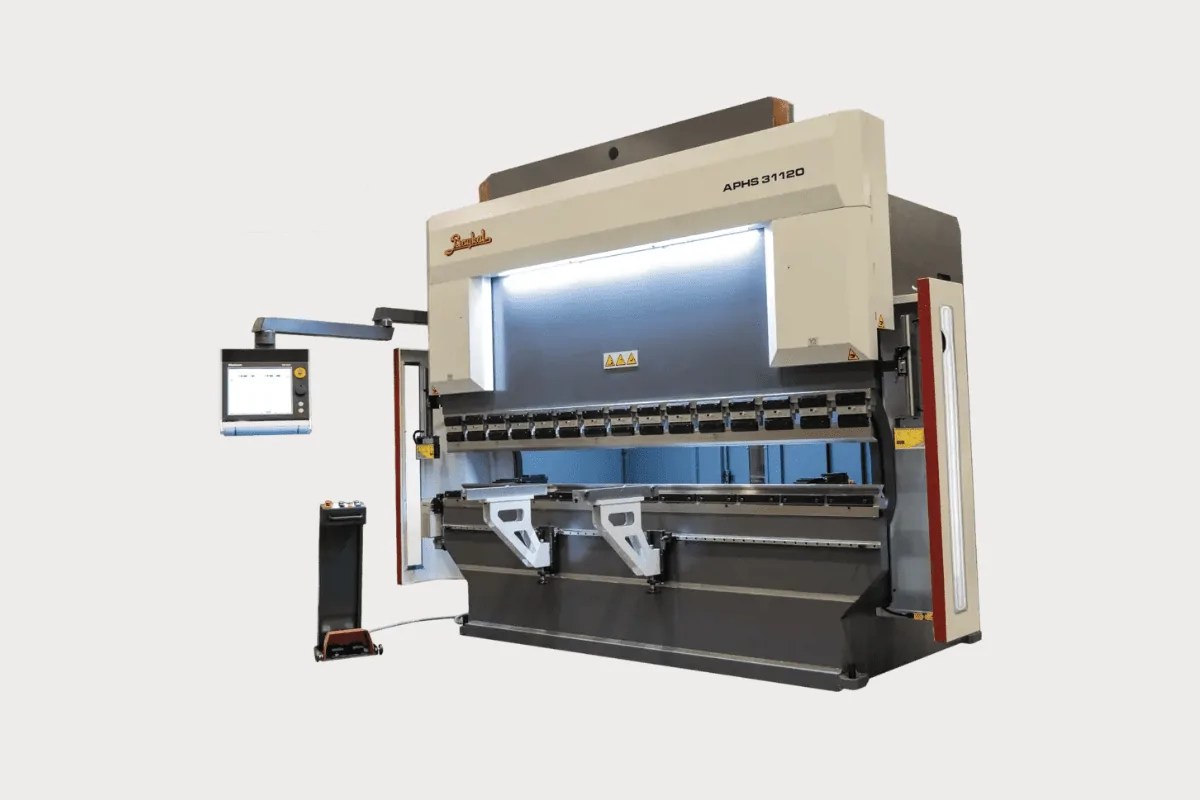
Modern CNC press brake controllers can measure the actual bend angle mid-cycle using a laser or contact angle-measuring system and adjust the ram stroke in real time to hit the programmed target, correcting for springback automatically rather than relying on a fixed overbend offset. This is the most accurate method for mixed-material shops or parts with tight angular tolerance, because the controller compensates for lot-to-lot material variation instead of a static number entered by the operator.
As Fab-Line’s applications team tells shops sizing a new brake, closed-loop angle measurement earns its cost on mixed-material work, not on a single repeat part. It requires a brake with closed-loop angle measurement built in, not just CNC backgauge positioning. For shops running the same handful of materials and thicknesses repeatedly, a documented overbend chart often gets you close enough without the added equipment cost. For shops running varied stainless and aluminum work with tight print tolerances, the payback on angle-measuring tooling comes from first-piece acceptance instead of scrap and rework. See how bend deduction factors into the same calculation in our bend deduction guide.
Frequently Asked Questions
Does springback change with bend radius?
Yes. A sharper bend radius relative to material thickness increases springback because the strain is concentrated over a shorter arc. A larger radius spreads the deformation over more material and springs back less. This is one reason minimum bend radius and springback compensation have to be worked out together, not separately.
Can you eliminate springback entirely?
Coining gets close by physically reshaping the metal at the bend, but it is tonnage-intensive and not practical for every job. For most production work, the realistic goal is consistent, predictable springback that a documented overbend offset or CNC compensation corrects for, not zero springback.
Why does the same program produce different angles on different days?
The most common cause is mill lot variation in the material’s yield strength, which changes how much it springs back even though the gauge and alloy callout are identical. Die wear and inconsistent material flatness going into the brake are the next two most common causes.
Does grain direction affect springback in aluminum?
Yes, more than it does in most steel. Bending aluminum across the grain typically produces more consistent results with less cracking risk and more predictable springback than bending parallel to the grain, particularly in 6061-T6 and similar tempers.
Getting Bend Angles Right the First Time
Springback is not a defect to engineer out of a design, it is a material property to plan for in tooling, programming, and process selection. The shops that hold tolerance consistently are the ones with a documented overbend chart by material and thickness, the right choice between air bending and bottoming for the job, and a press brake with the tonnage and control capability to execute it. Fab-Line Machinery sells and services the CNC press brakes that make that level of control practical, from standard air bending setups to brakes with closed-loop angle measurement for shops that cannot afford a second hit on a part. Questions on sizing a brake for your springback and tolerance needs, or want to talk through a shop setup that includes shears or laser cutting alongside your press brake? Contact Fab-Line or call (888) 317-3615.